
Honda Explains EV Battery Dilemma: As electric vehicles (EVs) accelerate into the mainstream, automakers face a hidden roadblock that’s proving more complex than it seems: battery guarantees. Honda, one of the global leaders in automotive innovation, recently explained the core dilemma and how an old idea—battery swapping—might be the future-forward solution.
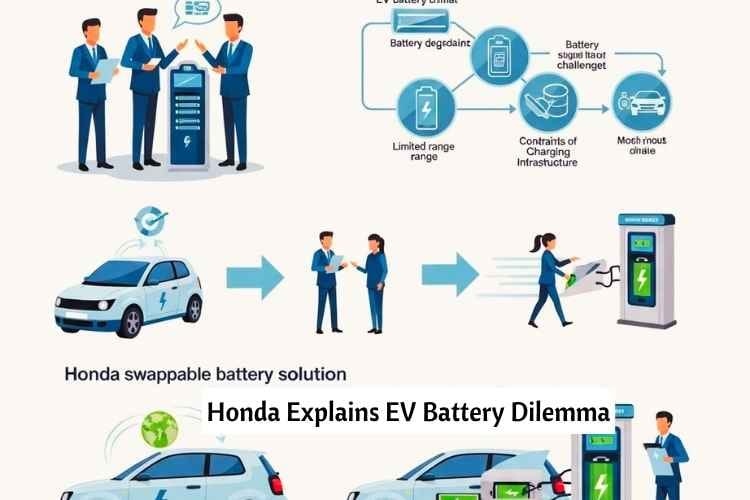
Table of Contents
Honda Explains EV Battery Dilemma at a Glance
| Aspect | Details |
|---|---|
| Component in question | EV Battery Pack |
| Typical warranty | 8 years / 100,000 miles (industry average) |
| Battery cost | 30%–50% of EV’s total price (can cost $5,000–$20,000 to replace) |
| Biggest OEM challenge | Predicting long-term battery performance & covering costly replacements |
| Customer fear | Battery degradation, range loss, and expensive replacement bills |
Why Are Battery Guarantees So Difficult for Automakers?
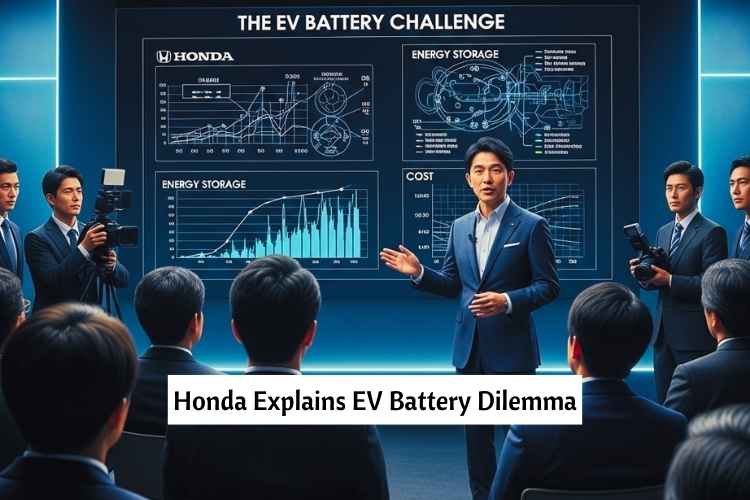
Batteries aren’t like engines. Their lifespan and performance depend heavily on how the car is used—where it’s driven, how often it’s fast-charged, and even the local climate. This variability makes it nearly impossible for automakers to confidently guarantee battery life across all scenarios.
Key Challenges
| Problem | Impact on OEMs |
|---|---|
| Unpredictable degradation | Hard to model long-term performance across all users |
| High replacement cost | Huge financial liability if warranties are widely claimed |
| Customer skepticism | Potential buyers hesitate due to range loss or costly battery failures |
Honda’s Proposed Solution: Battery Swapping
Instead of getting stuck in the warranty struggle, Honda is looking at a paradigm shift—battery swapping.
What Is Battery Swapping?
Think of it like changing the batteries in your flashlight:
Drive into a station, remove the depleted battery, and pop in a fully charged one. Done in minutes.
Benefits for OEMs & Users
| Benefit | Explanation |
|---|---|
| No long-term ownership | Customers don’t own the battery—OEMs do |
| No worries about degradation | Faster “refuelling” |
| Faster “refueling” | Swaps take 3–5 minutes—faster than most EV chargers |
| Better battery management | Users swap out ageing batteries without paying for a replacement |
Honda Explains EV Battery Dilemma: Honda’s Real-World Trials
| Location | Program Name | Type of Vehicles | Highlights |
|---|---|---|---|
| Japan | Honda Mobile Power Pack e: | Electric scooters & delivery EVs | Modular battery for short-range vehicles |
| India | Honda e:Swap | Rickshaws and urban commuters | Honda e: Swap |
Conclusion On Honda Explains EV Battery Dilemma
The EV revolution is unstoppable, but battery-related fears still hold buyers and automakers back. Honda’s transparent take on the EV battery dilemma helps shine a light on a challenge the industry must solve if it’s going to go all-electric.
By decoupling battery ownership from EV ownership, battery swapping removes a key barrier—the long-term warranty risk—and builds a more flexible future for electric mobility.
It won’t replace charging stations entirely. But in the right places—busy cities, delivery fleets, or scooter networks—battery swapping might just be the game-changing solution OEMs have been waiting for.

Bhakti Rawat is a Founder & Writer of InsureMyCar360.com. This site Provides You with Information Related To the Best Auto Insurance Updates & comparisons. 🔗