
Blade-Battery Boom: Electric-vehicle (EV) batteries are no longer a technical footnote; they’re the market driving a multi-billion dollar reshaping of transport and energy. Among the many chemistries and pack designs, the “blade battery”, a long, thin cell-pack innovation popularised by BYD, is attracting significant attention. Recent market estimates peg the blade-battery market at roughly $1.2 billion in 2024 and forecast it expanding to about $6.0 billion by 2034, implying a 19.69% compound annual growth rate (CAGR) over the coming decade. That’s a dramatic climb, and there are clear technical, commercial, and macro reasons why it’s likely to continue.
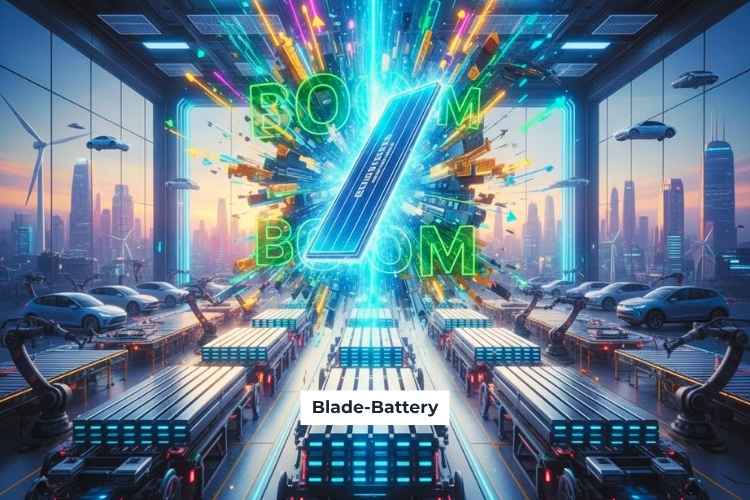
Table of Contents
What is Blade-Battery?
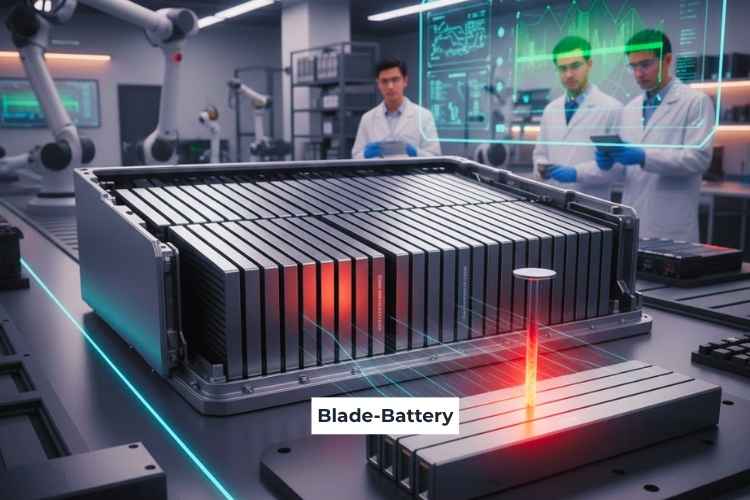
- Space efficiency (higher volumetric utilization): the blade shape reduces wasted space inside the pack so you get more energy per litre of pack volume.
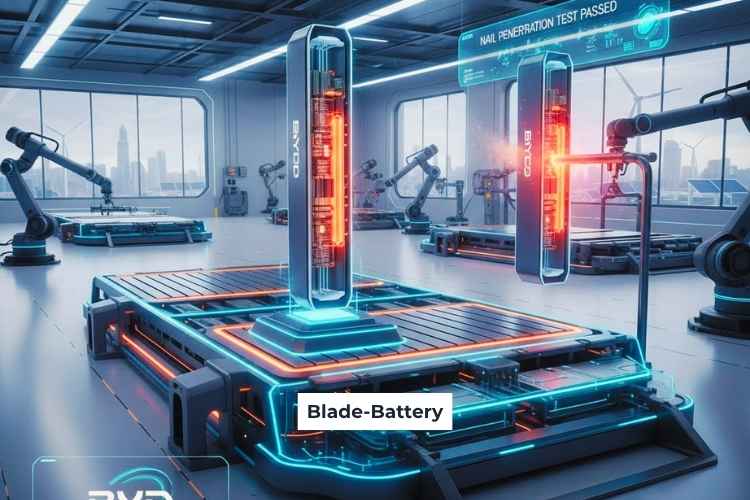
- Improved thermal performance and safety: the cell geometry and packaging reduce hotspots and the tendency for a single damaged cell to trigger thermal runaway. Several lab and field studies report better safety outcomes compared to traditional cell formats.
- Lower system cost: because the design simplifies cell-to-pack integration, manufacturers can cut packaging parts and assembly complexity — and those savings add up at scale.
Why the Blade-Battery market is accelerating – 7 reasons
1) EV demand is still rising fast
Global EV sales and battery demand continue to climb, and automakers look for battery formats that reduce costs while delivering safety and range. This creates a ready market for any battery architecture that improves packaging efficiency and reduces system cost. Market research across the battery industry shows robust growth trajectories that feed into blade demand growth.
2) Cell-to-pack and system integration gains
Blade batteries are well suited to cell-to-pack approaches (fewer intermediate components between cell and pack). That lowers weight, reduces parts count, and simplifies assembly — meaning manufacturers can hit cost and efficiency targets faster.
3) Safety and regulatory tailwinds
High-profile battery fires create political and regulatory pressure for safer battery technologies. Blade cells’ geometry and cooling behaviour make them attractive not only to OEMs but also regulators and insurers who prize demonstrated safety gains. Research literature highlights blade batteries’ improved thermal management and safety advantages.
4) Supply-chain advantages for certain chemistries
Blade batteries are often paired with LFP (lithium-iron phosphate) chemistry — a lower-cost, longer-life, and cobalt-free chemistry growing quickly because of stable raw-material economics and safety. For markets where range per kWh is less critical than cost and longevity, LFP blade packs are a pragmatic choice.
5) Proven mass-market adoption (BYD & partners)
BYD — both a leading EV maker and a major battery manufacturer — has driven commercial adoption of blade cells at scale. When a vertically integrated giant standardises on a format, suppliers follow: cell makers expand capacity, pack suppliers retool, and OEMs evaluate the format more seriously. That cascade effect fuels market growth.
6) Manufacturing economies of scale
As production ramps, prices for blade cells decline. Even modest cost reductions in battery systems have outsized effects on EV prices, spurring more adoption and in turn further battery demand — a classic positive feedback loop.
7) Versatility across vehicle segments
Blade batteries suit both passenger cars and commercial/utility vehicles (where pack safety, longevity and cost matter). That broader addressable market is critical to reach a multi-billion dollar total.
Blade-Battery Market: Key Projections & Metrics
| Metric | Value / Range | Source |
|---|---|---|
| 2024 estimated market (global) | ~$1.186 billion | Market report. |
| 2034 projected market | ~$5.977 billion | Market report (same). |
| Implied CAGR (2025–2034) | ~19.69% | Calculation embedded in projection. |
| Alternate short-term forecasts | 30–38% CAGR (short windows / different scope) | PRNewswire / industry summaries. |
| Main chemistry pairing | LFP (dominant for blade cells) | Technical reviews and BYD documentation. |
| Primary commercial driver | Cost down, safety up, cell-to-pack integration | Industry analyses. |
Conclusion
The blade battery is a textbook example of a systems innovation — a modest change in geometry with outsized effects on cost, packaging and safety. Market forecasts showing roughly $6 billion by 2034 and a ~19.69% CAGR reflect this combination of technical merit and commercial momentum. While the term “unstoppable” is strong, the evidence suggests powerful tailwinds: rising EV demand, economics that favour cell-to-pack formats, and real world deployments (notably BYD) that prove the concept at scale.

Bhakti Rawat is a Founder & Writer of InsureMyCar360.com. This site Provides You with Information Related To the Best Auto Insurance Updates & comparisons. 🔗